

Choosing between 12V and 24V lighting sounds like a small decision. It can affect which lights you can use, how far you can run the cable and how easily you can expand the setup later. The right answer starts with the whole system, rather than the number printed on one fitting.
For an existing setup, matching the equipment you already have is usually the first priority. For a new garden or deck project with longer cable runs, 24V is worth considering. For camping, 12V often suits the available power system, provided the lights are designed for its actual operating voltage.
What does 12V vs 24V lighting mean?
The voltage rating describes the electrical supply the light is designed to receive. A 12V-only light needs a compatible 12V supply. A 24V-only light needs a compatible 24V supply. Some products accept a range, but that must be stated in their specifications.
Both are commonly sold as “low voltage lighting”. In electrical terminology, these voltages fall within extra-low voltage. That distinction does not make every installation suitable for DIY or remove the need for correct protection and compatible equipment.
Voltage is also separate from brightness. Compare lumens, beam angle and how the fitting directs its light when deciding whether it will light a path or deck properly. A 24V label does not automatically mean a brighter light.
Why 24V can help on longer cable runs
For the same electrical power, a higher supply voltage means less current. A nominal 48W DC lighting load draws 4A at 12V or 2A at 24V. These are simple design examples using current = power ÷ voltage.
Cable resistance causes voltage to fall along a run. With the same cable, distance and nominal load, the lower current at 24V produces less voltage drop in volts. That drop also represents a smaller percentage of the starting voltage. This is why 24V is often useful for longer garden runs or larger LED strip installations.
It is not a licence to use any cable or connect unlimited lights. The cable size, connectors, layout, total load and manufacturer’s maximum run length still matter. Use the supplier’s cable guidance or a layout-aware calculation before ordering.
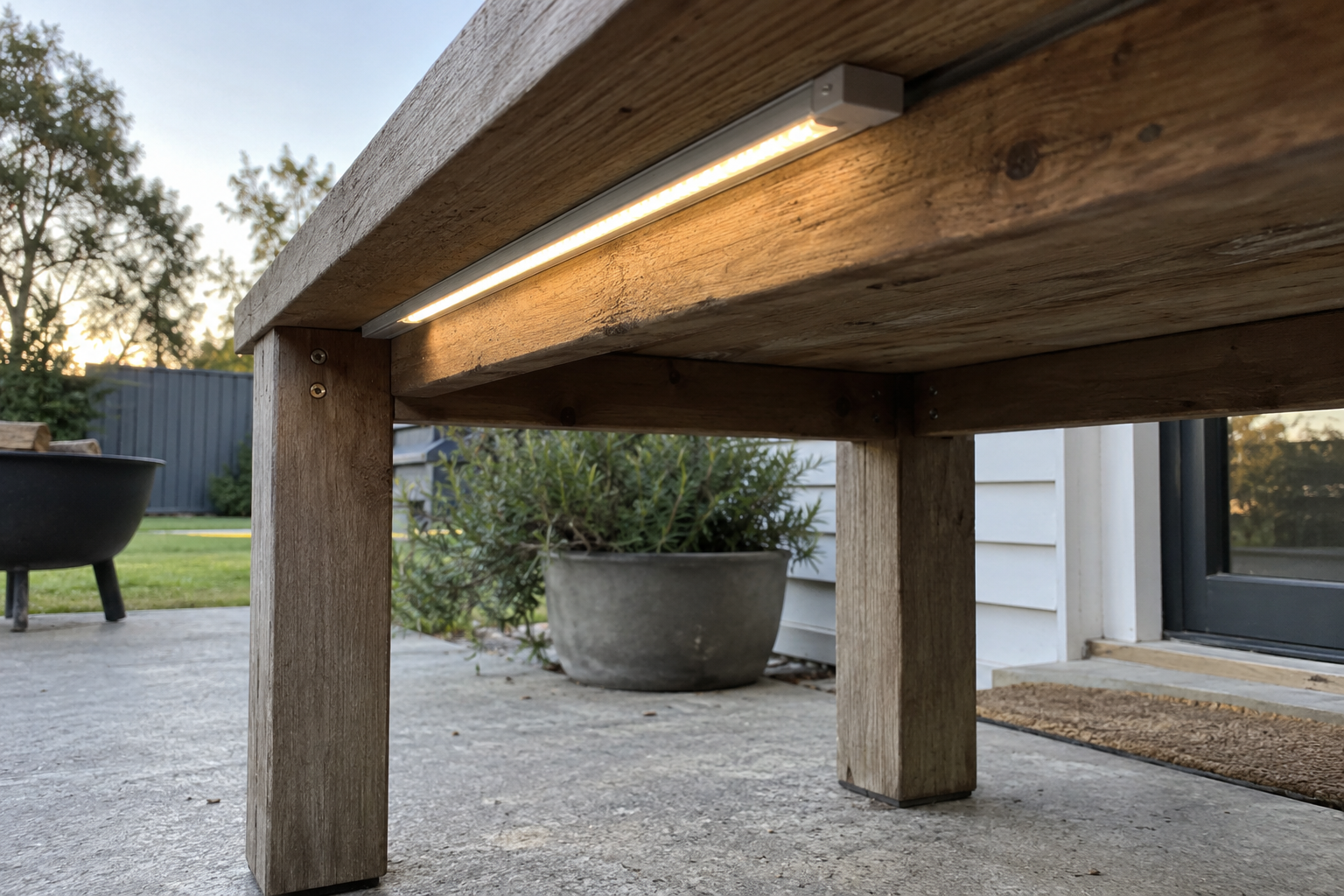
When 12V makes sense
A compatible 12V system can be a practical choice for a small lighting project, an existing 12V garden kit or a camping setup built around a nominal 12V battery. Keeping to one supported system can also simplify replacement parts and accessories.
For camping, check more than the words “12V”. Battery voltage changes with state of charge and charging conditions. A light intended for a regulated 12V power supply may not be suitable for direct connection to a battery system. Look for an input range and an explicit statement of vehicle or battery compatibility.
Use the manufacturer’s specified connectors and protection. A low voltage battery can still deliver enough fault current to overheat damaged or undersized wiring. A custom battery circuit needs proper cable and fuse selection; this guide does not replace that design work.
AC and DC: the detail that is easy to miss
Two products can both say 12V and still be incompatible. A traditional garden transformer may provide 12V AC, while an LED power supply may provide 12V DC. Some fittings accept both; others do not.
Read the output label on the supply and the input specification on the light. Check AC or DC, voltage, polarity where applicable, and whether the fitting requires a constant-voltage supply or a specific constant-current driver. Connector fit alone does not prove electrical compatibility.
The same applies to dimmers, sensors and controllers. Each part must support the system voltage, supply type and current it will carry. Buying the light first and sorting out the rest later can turn a straightforward project into a collection of mismatched parts.

Three common buying situations
Replacing one failed garden light: identify the existing supply and fitting specifications before shopping. Match voltage, AC/DC type, connector system and outdoor suitability. Do not assume a similar-looking replacement will work.
Starting a new garden lighting run: sketch the cable route and mark each fitting’s wattage. Compare complete 12V and 24V options using that layout. A 24V option may make cable losses easier to manage, but the final choice depends on the actual equipment.
Adding lights to a camper: confirm battery-system compatibility, current draw and connection method. A suitable pre-made kit is a simpler starting point than mixing household LED strip with vehicle wiring.
What to check before buying
Ask the supplier to confirm the complete combination: light model, supply model, voltage, AC/DC type, controller, cable size and maximum run. For outdoor use, also check installation orientation, weather exposure, connector sealing and access for maintenance.
Think about future additions now. An extra branch or a few more fittings can change both supply capacity and cable losses. Keep model numbers and instructions so you can source compatible replacements instead of rebuilding the system.
Can you connect 12V lights to a 24V supply?
Not unless the manufacturer explicitly rates those lights for 24V operation. Applying too much voltage can damage a fitting. Connecting a 24V-only light to 12V may also result in poor operation or no light at all.
Which would we choose?
For a new longer-run home project, we would assess a complete 24V system early in the planning. For an existing 12V installation or compatible camping system, staying with 12V may be the more practical choice. Buy the combination that suits the job and has clear specifications.
For help identifying the right components, contact Future Lighting with your layout, cable distances and any existing model numbers.
Technical references
For terminology and regulatory scope, see the EESS explanation of equipment outside its scope. Use the instructions for your chosen lighting system to confirm compatibility and permitted cable runs.
Images are original AI-generated illustrations of lighting applications.
[…] weighing up 12V against 24V for a bigger wired setup, we’ve covered that separately in our buying guide, and when you’re ready to size a transformer, that guide is the next job on the […]