

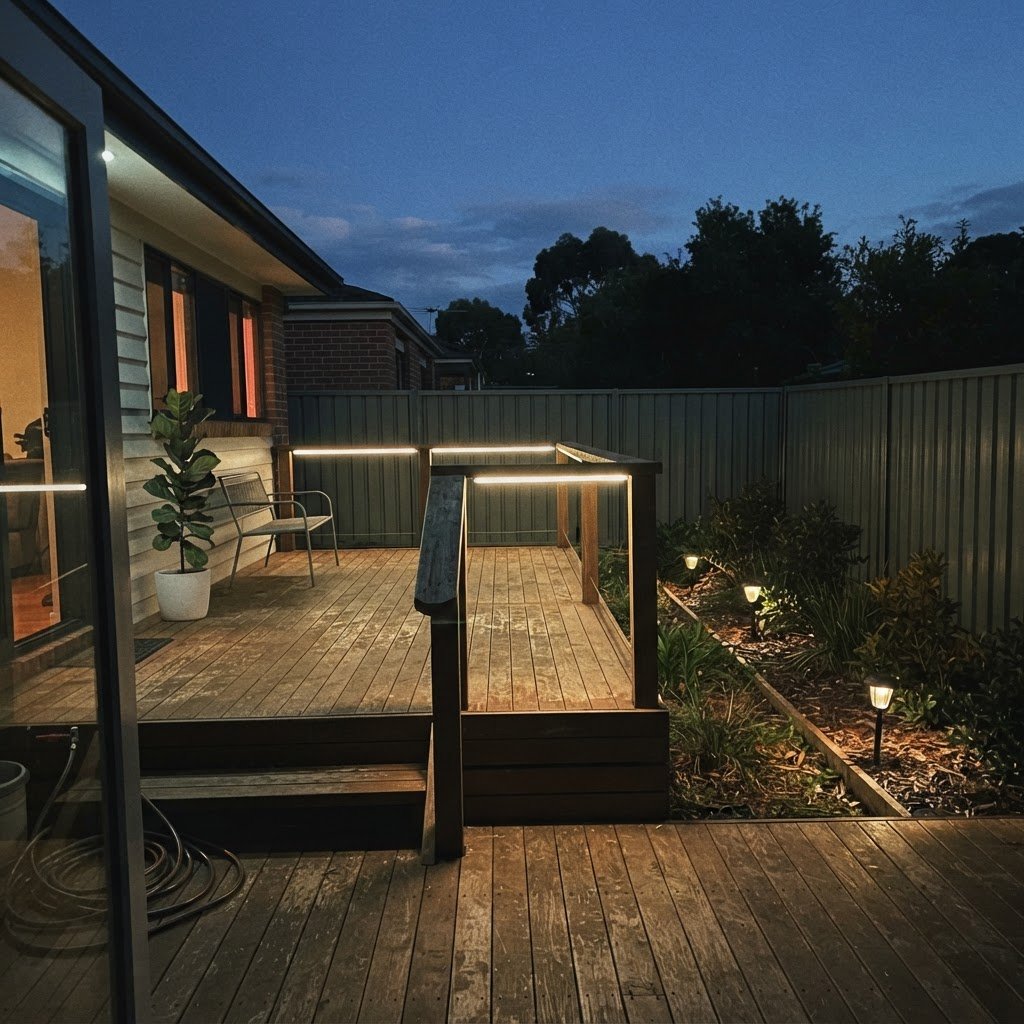
Anyone who’s done a Bunnings run in September knows the ritual. A pack of solar stake lights goes in the trolley because it’s sixty bucks and there’s no thinking required, you bang them in the lawn and they’re glowing by dinner. And most of us know the other half of the ritual too, around July the year after. Half of them are dead, the rest are dim, and the winter sun never quite catches them back up.
And here’s the part that might surprise you, because it’s not you, it’s not bad luck, and it’s not solar either. It’s the build quality. There’s a version of solar lighting that’s built to last and does exactly that, it just doesn’t live on the big-box shelf at a multipack price. What died out the back wasn’t solar lighting, it was a disposable product wearing a solar costume.
So let’s settle the solar vs 12V garden lighting question honestly: cheap solar, good quality solar, and wired, and where each one actually earns its place.
What solar does genuinely well
Let’s give solar its due first. You stake a light in the ground and walk away. No cables, no transformer, no planning, no electrician, no trench across the lawn. For the DIY market that’s the whole appeal, and it’s a fair one.
Solar also lets you experiment. Testing whether a spot actually needs light before you commit to anything permanent is exactly how I’d start too. And when a quality unit has its panel on a cable, you can put the panel where the sun is and the light where you need it, which solves the problem people actually buy solar to solve.
So solar isn’t the enemy here. Cheap solar is.
Why cheap solar keeps dying on you
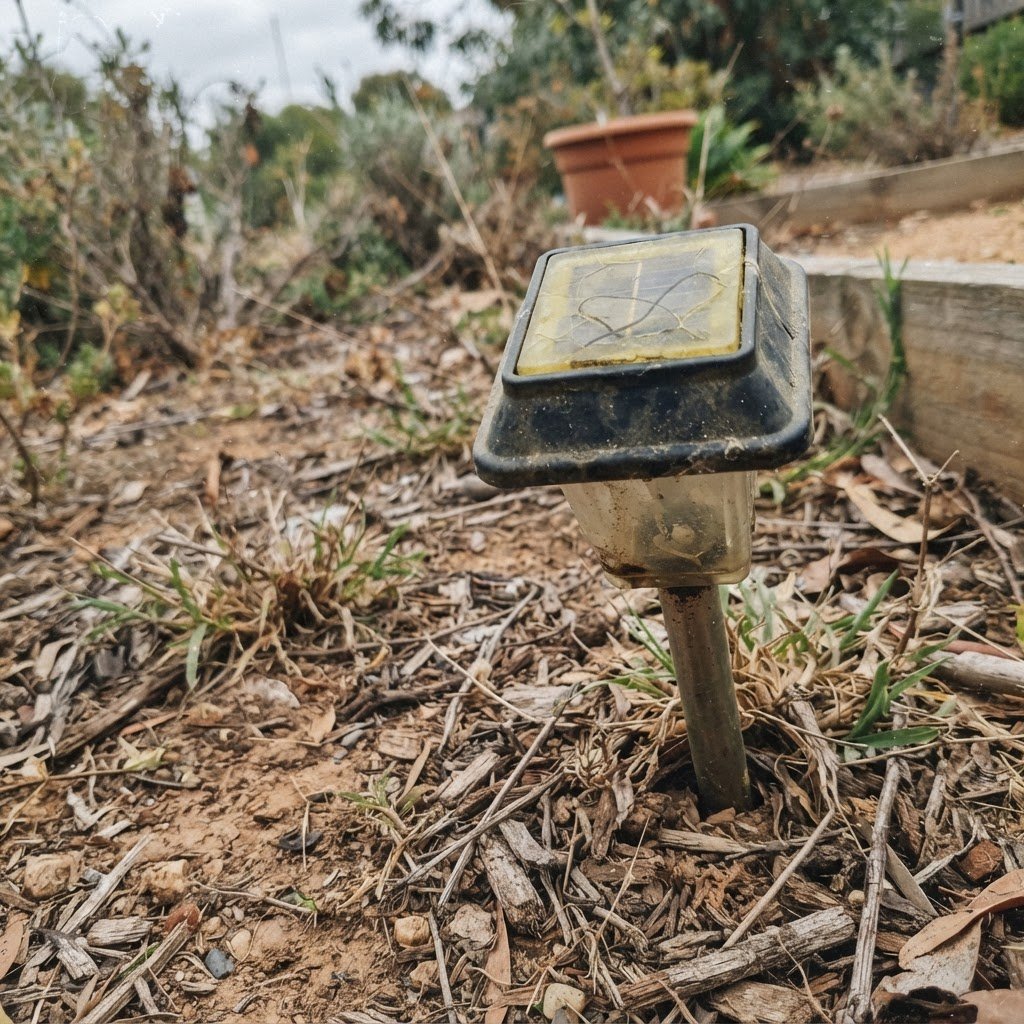
I watched this industry change from tungsten to halogen to LED, and the one thing I can tell you from twenty years of doing it for a living is this: there are lights built to light, and lights built to sell.
Most of the solar lights in those big multipacks fall into the second group. The panels are tiny, we’re talking fractions of a watt. The batteries are small, cheap NiMH cells that lose a bit of capacity every time they get cooked in the sun and drained flat overnight. The panels cloud over under our UV within a season, so even a healthy battery stops getting a full charge. And the whole thing is sealed to a standard that was never going to survive a Queensland storm followed by a forty degree week.
Then there’s the part nobody mentions on the box. To stretch a small battery through the night, the light starts bright and quietly dims itself as the charge drops away. Bright at 6pm, a soft flicker by 9. You didn’t imagine that, it’s a design decision, not a fault.
Here’s the thing though. Every one of those problems is a spec sheet problem, not a solar problem.
Commercial solar already proved the point
If solar lighting didn’t work, there’d be no such thing as a solar street light. But there is, and regional roads, council parks, mine sites and marinas have been using them for years. Those units sit out in full weather, run all night every night, and hold up for a decade. The tech was never the problem.
The difference between a street light that runs for ten years and a stake light that dies in one winter comes down to a handful of specs, and none of them are a secret:
- A glass-laminated panel instead of epoxy-coated plastic, so the panel doesn’t cloud under UV.
- A lithium iron phosphate battery, LiFePO4 if you’re reading spec sheets, instead of a tiny NiMH cell. Lithium handles the heat, handles being drained, and lasts for years of daily cycles.
- A proper charge controller with overcharge and deep discharge protection, so the battery isn’t being flogged in both directions every day.
- Real sealing, IP67 or better, so the weather stays outside.
- Replaceable parts, because even good batteries eventually retire.
Commercial spec, in other words. It exists, it’s proven, and it’s been sitting in the commercial sector while the residential shelf keeps getting fed the cheap stuff.
Commercial quality solar for residential
This is the gap, and it’s where I reckon the Australian DIY market is heading. Quality solar built to commercial spec, sized and styled for a house instead of a highway.
For the backyard, the best setup going around is solar running 12V LEDs with a LiFePO4 battery and a separate panel on a cable. The panel lives in the sun, the light lives where you want light, and because it’s the same efficient 12V LED gear underneath as the wired kits, the light quality is identical. Some good quality integrated units, panel and all in one fitting, last for years too, they just need to be placed honestly where the sun actually reaches.
For a DIYer, that’s the best of everything. No electrician, no cable run across the yard, no transformer, and no disposable product. You fit it once, you position the panel properly, and it just goes, year after year.
Where 12V wired still earns its place
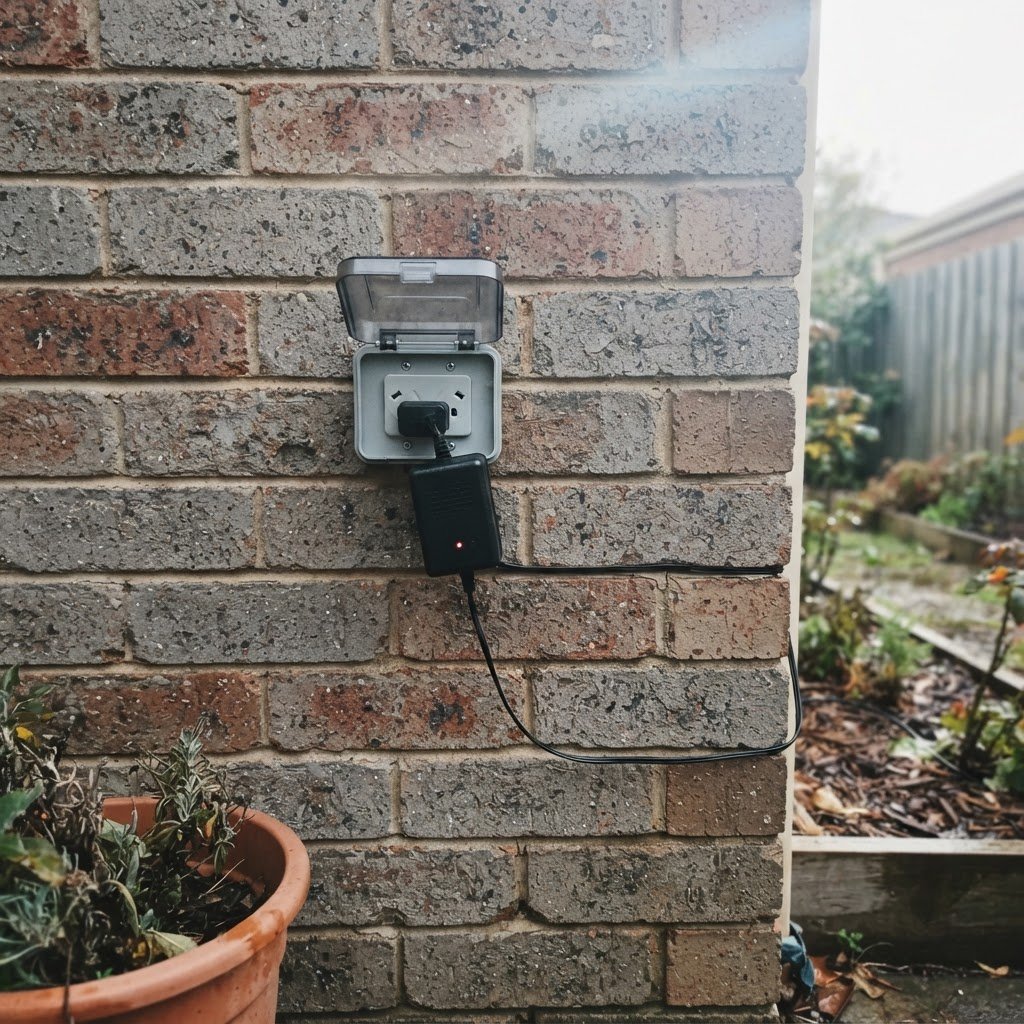
I sold low voltage lighting for years, so I’m never going to talk you out of a wired system. It still wins in a few situations:
- Big multi-light runs off one transformer, especially along a deck or fence line, where one power point feeds everything.
- Smart home setups, because a transformer on a smart plug gives you app control and schedules with no battery in sight.
- Spots where even a cable-mounted panel can’t find decent sun.
- When you want maximum output all night, every night, with zero battery maintenance, ever.
And it’s worth busting the big myth while we’re here: a plug-and-play 12V or 24V kit is extra-low voltage, meaning under 50 volts AC by the electrical regulators’ definition, so it plugs into a standard outdoor power point and it’s legal DIY right across Australia. No electrician needed for the lighting itself. The only job for a sparky is adding a new power point if you don’t already have one outside.
The honest scorecard
| Cheap solar | Quality solar, commercial spec | 12V wired | |
|---|---|---|---|
| Getting started | Stake and walk away | Fit once, position panel, done | Sunday arvo with a starter kit |
| Brightness | Marker glow | Real light, real 12V LED fittings | Real light, all night |
| Winter and shade | Struggles badly | Panel placement solves most of it | Same output every night |
| How long it lasts | Months to a couple of years | Years of daily cycles | A decade or more |
| Electrician needed | No | No | No, plug-in is legal DIY |
| Renting or removing | Easy | Easy | Less easy |
| Battery to manage | Yes, and it dies fast | Yes, but it lasts and it’s replaceable | None |
Quick tips that help too
If you’re buying solar, buy it once:
- Glass-laminated panel, LiFePO4 battery, replaceable parts. If the spec sheet doesn’t say, walk away.
- Separate panel on a cable if the light’s spot is shaded. Panel in the sun, light where you need it.
- Face the panel true north and be ruthless about shade, even half-day shade will halve your winter charge.
- Ask for real lumens, not “up to” numbers. An honest retailer publishes the tested figure.
If you’re going wired:
- Size the transformer for what you’ll end up with, not just what’s in the starter box.
- Put it on a timer or smart plug so it’s dusk-to-bedtime, not dusk-to-sunrise.
- Keep the transformer out of all-day western sun, they last longer in the shade like most things.
So, what I’m saying is this: move up to commercial quality solar and you get the DIY ease that pulled you toward solar in the first place, with gear that actually holds up in Australian conditions. And if your setup genuinely suits wired 12V, that’s a fair call too. But don’t write solar off on the back of a bad multipack, the good stuff is out there, you just have to know which specs to look for.
If you’re weighing up 12V against 24V for a bigger wired setup, we’ve covered that separately in our buying guide, and when you’re ready to size a transformer, that guide is the next job on the list.