
When you buy lighting in Australia, terms such as “SAA approved” and “RCM compliant” can make a product sound reassuring. They are useful only when you understand what the claim refers to and can match it to the equipment you are buying.
SAA and RCM compliance are not two interchangeable quality badges. SAA Approvals is a certification body. The RCM is a regulatory compliance mark. Neither, on its own, promises that a garden light will survive years of sun, rain or coastal exposure.
What is SAA approval?
SAA Approvals is an accredited third-party certification body that issues electrical product safety certificates. A certificate relates to the product models and conditions listed on it, assessed against the applicable standards.
That means the model details matter. A seller showing a certificate for a different driver, an older product or another brand has not established that the item in your cart is covered. A certificate for a component should not be presented as if it automatically certifies the complete lighting system.
SAA is also not the only recognised certification pathway. The absence of an SAA-branded certificate does not, by itself, show that a product is non-compliant. Ask what evidence applies to the actual product rather than insisting on a particular commercial certification logo. See SAA Approvals’ description of its role.
What does the RCM mean?
RCM stands for Regulatory Compliance Mark. It is used in Australian electrical safety and communications regulatory arrangements. The requirements that apply depend on the product, including whether electrical safety, electromagnetic compatibility or radio rules are relevant.
For example, a mains-powered lighting supply and a wireless lighting controller may have different compliance obligations. A mark must be supported by the relevant supplier actions and evidence; printing a symbol on a housing is not the whole process.
The ACMA product-labelling guidance explains the RCM’s use in its arrangements and its shared use with the Electrical Equipment Safety System. A buyer should check the supplier and model information behind a claim.
How does the EESS fit in?
The Electrical Equipment Safety System, or EESS, covers defined in-scope electrical equipment. Responsible suppliers of in-scope equipment must be registered. Equipment requirements vary by risk level; higher levels require additional evidence and equipment registration.
For consumer lighting purchases, the mains-powered supply is an important item to check. Do not assume every component in a box has the same regulatory classification. Nor should you expect every low-risk item to have its own Level 3 certificate.
Use the official EESS website to find registration information and consumer guidance. The Energy Safe Victoria explanation outlines supplier registration, Level 2 and Level 3 equipment registration, and Level 3 certification requirements.
Are 12V and 24V lights covered in the same way?
Extra-low-voltage equipment is generally outside the EESS definition of in-scope equipment. That is different from saying it has no safety responsibilities or no other applicable rules.
A 12V garden light may sit outside that particular scope, while the mains-powered supply used with it is in scope. Electronic or wireless features can also bring other requirements into consideration. Assess the components and how they are supplied, rather than treating “12V” as an exemption from everything.
State requirements can add further detail. Queensland, for example, introduced requirements for specified extra-low-voltage water equipment from April 2025. Ordinary garden lighting advice should not be extended to pool or spa lighting. See the EESS scope explanation and Queensland’s water-equipment update.
Five useful checks before buying
1. Identify the seller and supplier. Look for a clear business name, contact details and someone who can answer a model-specific compliance question.
2. Ask for the exact model number. Match it across the product listing, label, instructions and supporting evidence. For a kit, check the supplied power unit as well as the lights.
3. Check any certificate claim. Ask for the certificate number and verify it with the issuing body. Read the covered models and conditions instead of relying on a cropped screenshot.
4. Check the intended use. Outdoor exposure, mounting orientation and compatible accessories still matter. A compliant indoor supply does not become an outdoor supply because it is powering garden lights.
5. Keep the records. Save the invoice, model details and installation instructions. These help with support, replacement parts and any future safety notices.
Does CE marking mean a product is suitable for Australia?
Not by itself. CE marking relates to a different regulatory framework. ACMA states that overseas markings do not establish compliance with its rules or automatically permit Australian supply without the required RCM labelling. See its guidance on overseas markings.
A listing that only says “CE approved” has not answered the Australian compliance question. Ask for the evidence that applies here.
Compliance and longevity are separate questions
Once you have checked applicable compliance, look at the practical details: enclosure materials, sealing arrangements, replaceable components, warranty conditions and access to a local supplier. Ask what is covered if moisture enters a correctly installed fitting.
An IP rating describes specified ingress protection; it does not tell you everything about resistance to UV, salt or corrosion. Likewise, a safety certificate does not provide an independent promise of brightness, battery runtime or service life.
What should a helpful supplier be able to explain?
A helpful supplier should identify the product, explain its intended installation and provide relevant compliance information without relying on broad slogans. If the details do not line up, resolve the question before buying.
At Future Lighting, our focus is helping buyers ask the right questions about suitability and reliability. Contact us with the model or project details you want to discuss. This guide explains buying checks; it is not a product-specific compliance assessment.
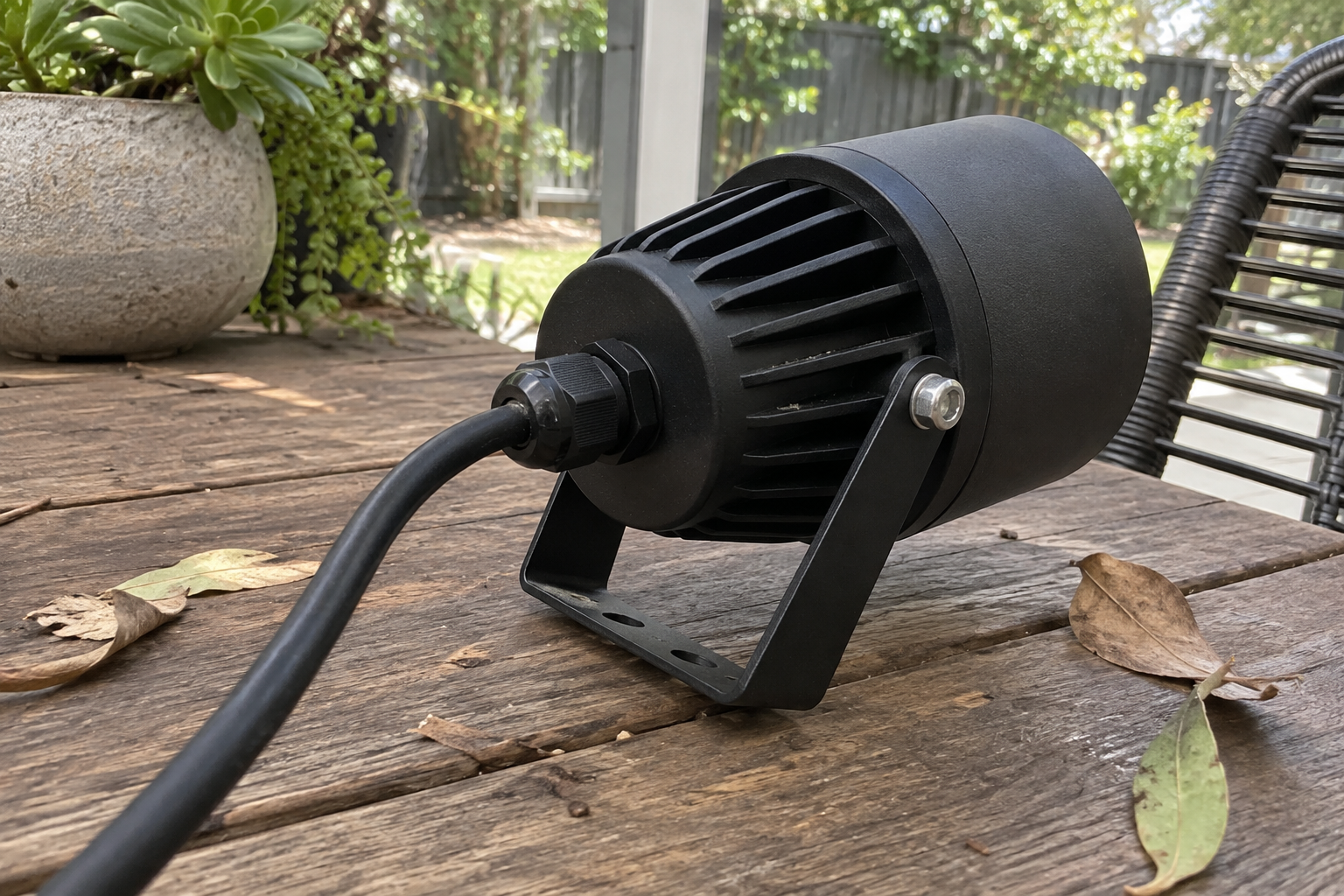
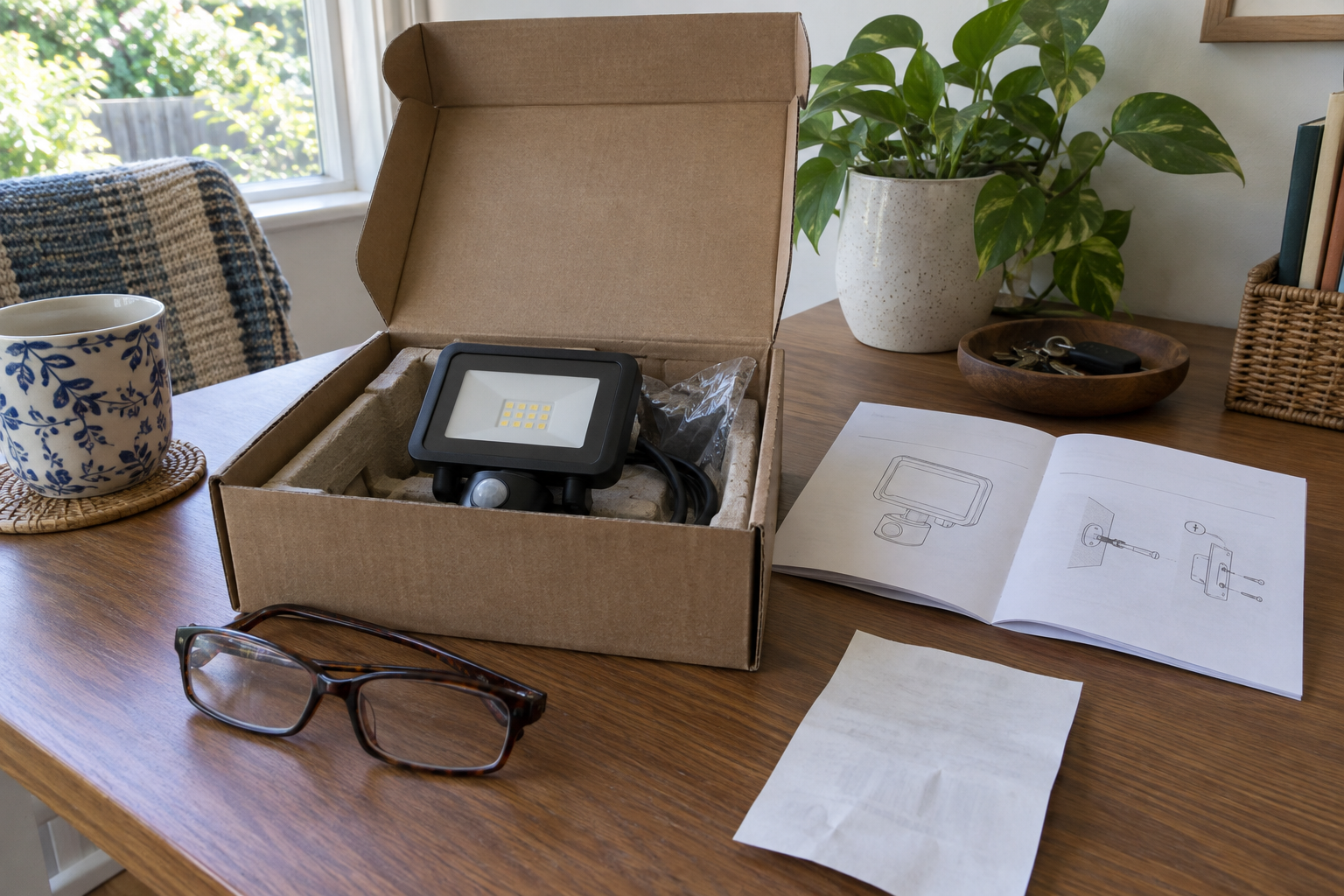
Images are original AI-generated illustrations of lighting applications.